SIF stands for Specialized Investment Fund. In India, it is a SEBI-regulated investment product introduced within the mutual fund framework for investors seeking strategies with greater flexibility than conventional mutual funds. The category creates an additional choice between traditional mutual funds and more customised investment structures such as PMS and AIFs. The important point is that SIF is not simply a higher-minimum mutual fund: its permitted strategies, risk controls, investor threshold and disclosures are distinct.
The guide


What is a Specialized Investment Fund?
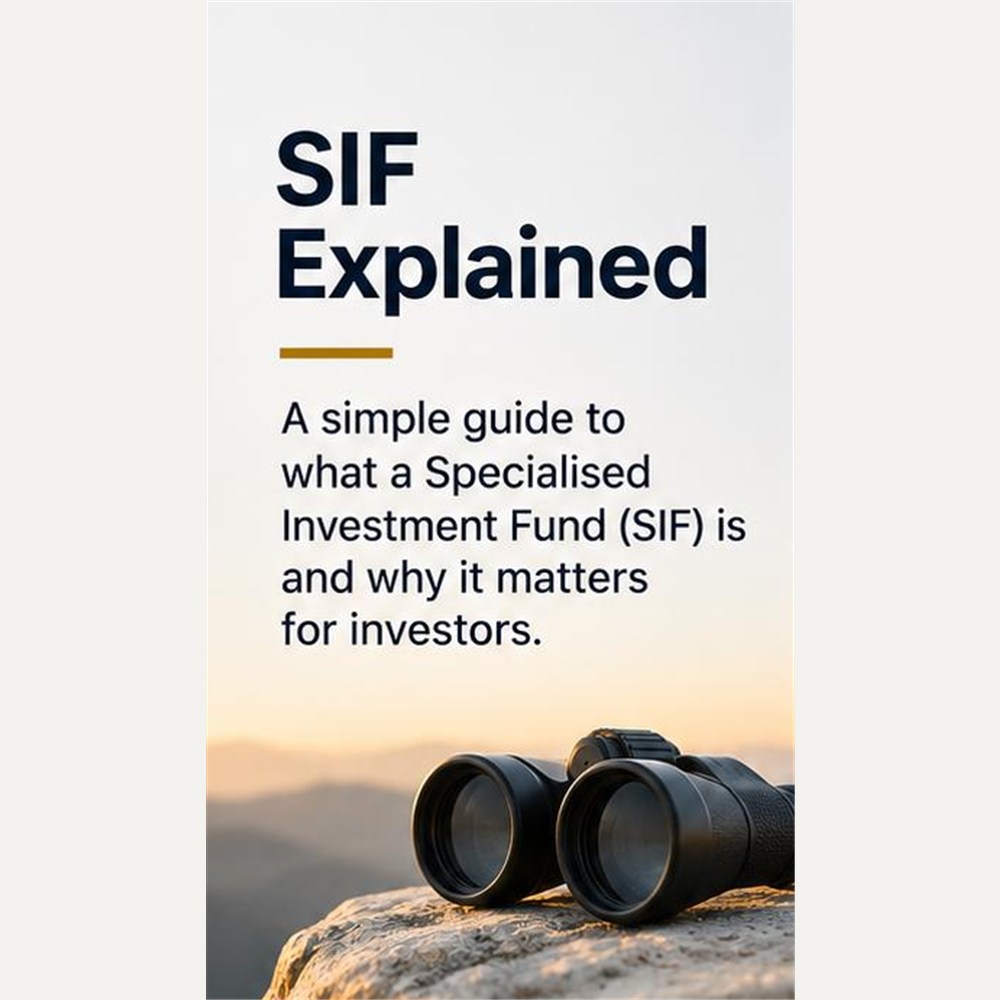
A Specialized Investment Fund is offered by an mutual fund house eligible & willing to launch Specialized Investment Fund under the SEBI framework. It can use a wider range of investment opportunity within the long-short approach, subject to regulatory limits. The structure remains within the mutual fund regulatory framework with respect to functionality of SIF.
So, Its important to know that the strategies may use derivatives, short exposure or sector-based positioning. These tools can change the pattern of returns and losses, and make it essential to know the strategy in depth before investing.
Why did SEBI introduce SIFs?
The traditional mutual fund framework offers diversified, pooled investments with standardised rules. PMS and AIF structures can offer different degrees of flexibility, but they also have different minimums, operating models and investor requirements. SEBI introduced SIFs to address the huge gap between these product categories through a regulated mutual-fund ecosystem product with additional strategy flexibility tax advantages vis-à-vis PMS & AIF
The framework is intended for investors who understand that more flexibility can bring more complexity. It should not be read as a shortcut to higher returns.
How are SIFs different from regular mutual funds?
A regular mutual fund strategy operates within conventional limits applicable to that category. SIF strategies can use certain permitted long-short and specialised approaches, subject to the regulations & framework applicable to SIF. Investors should compare the actual mandate, gross and net exposure, derivative use, liquidity terms, benchmark, risk band and costs -not just the product label.
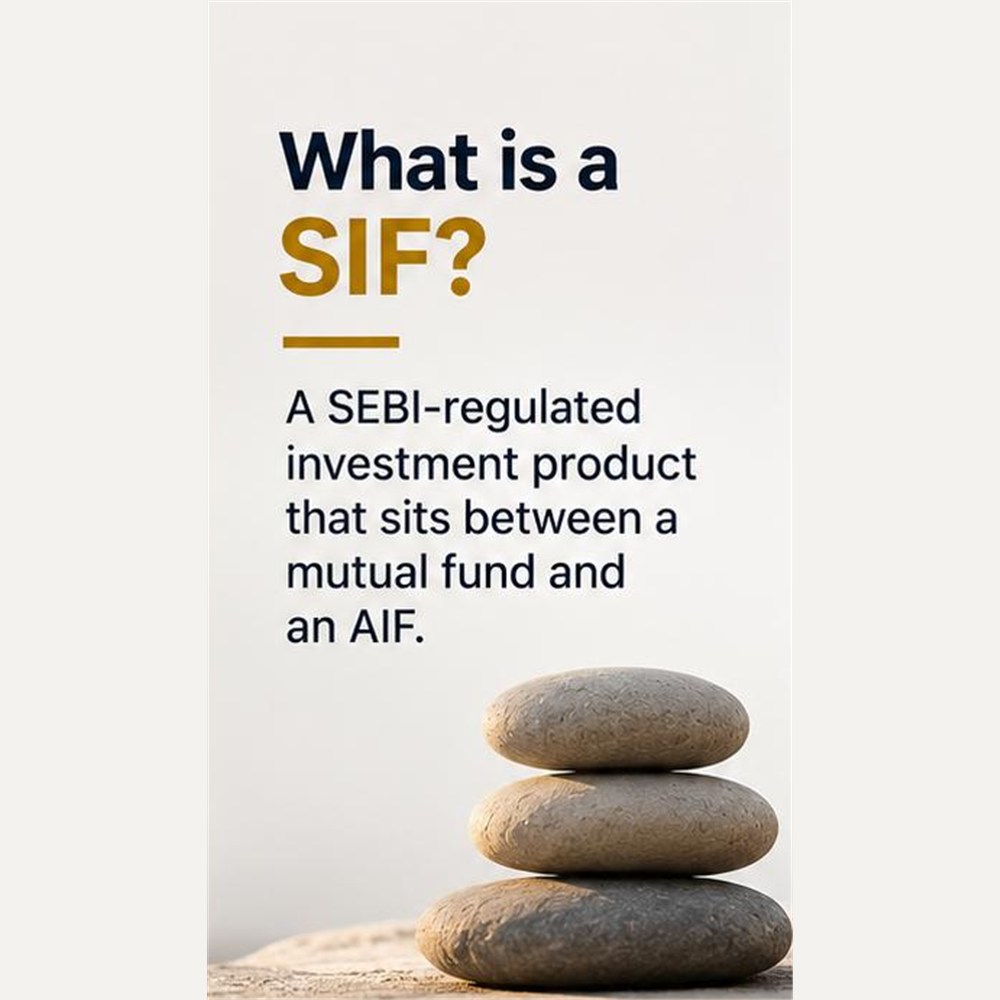
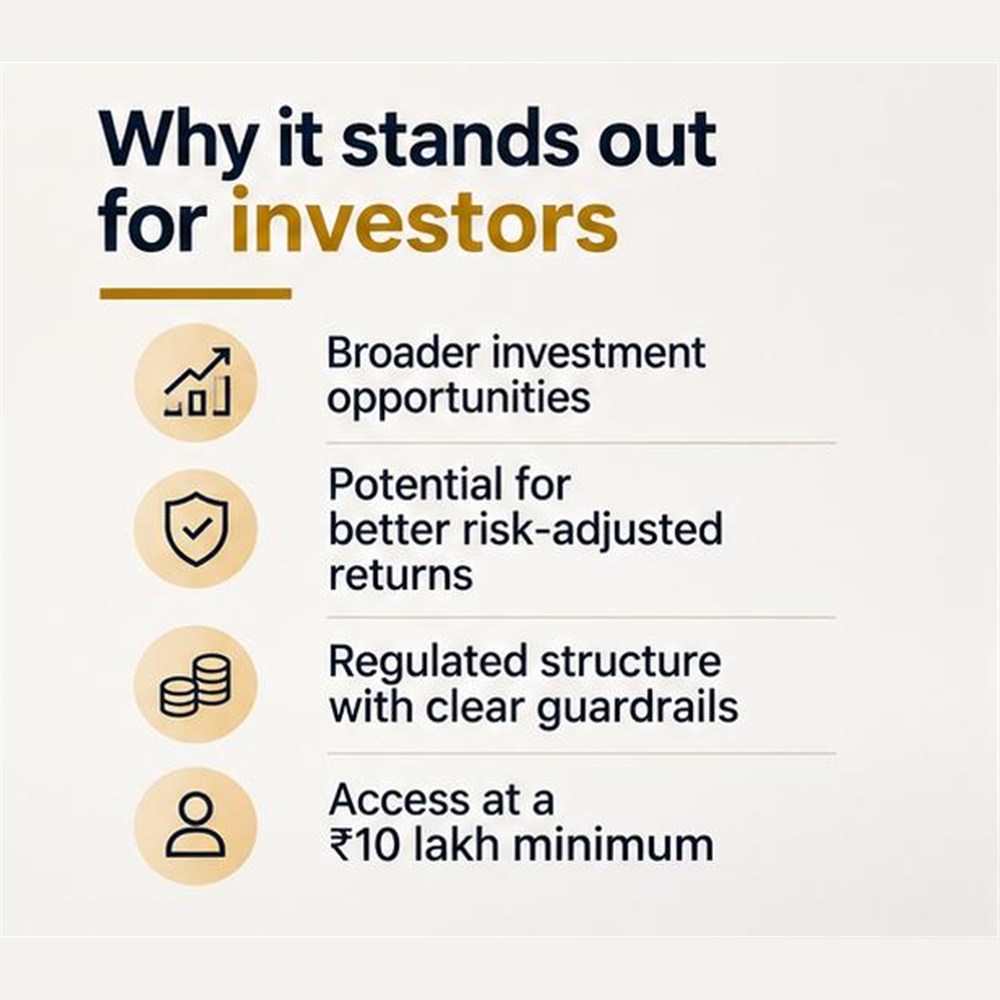
The minimum investment threshold is generally ₹10 lakh across an AMC’s SIF strategies at the investor PAN level, subject to regulatory exceptions such as accredited investors and specified employee investments. The threshold applies to SIF investments, not to regular mutual fund holdings. Always check the current scheme documents and applicable SEBI rules.
SIF vs Mutual Fund vs PMS vs AIF
| Feature | SIF | Mutual Fund | PMS | AIF |
|---|---|---|---|---|
| Regulator | SEBI | SEBI | SEBI | SEBI |
| Minimum investment | ₹10 lakh per AMC (PAN level) | As low as ₹100 to ₹500 | ₹50 lakh | ₹1 crore |
| Structure | Pooled, within the mutual fund framework | Pooled | Separate account in your name | Pooled, privately placed |
| Short exposure | Unhedged short up to 25% of net assets via derivatives | Hedging only | Mainly hedging | Long-short and leverage allowed (Category III) |
| Taxation | Taxed when you redeem, like a mutual fund | Taxed when you redeem | Capital gains taxed on every gain | Gains taxed as they arise |
| Liquidity | Daily, weekly or interval, as per the strategy | Usually daily | Can exit; exit load may apply | Often closed-ended with lock-in |
What strategies can an SIF offer?
The framework includes 7 strategies of SIF - equity long-short, equity ex-top 100 long-short, equity sector rotation long-short, debt long-short and hybrid long-short and Active Asset Allocator Long Short approaches, with permitted variants and structures. The seven strategy labels commonly used in investor education distinguish the principal investment approaches and their variants. The strategy information document explains the exact mandate of each live offering.
Each investment strategy has its own information document, asset allocation limits, derivative rules, liquidity provisions and risk disclosures.
Who should consider an SIF?
An investor can consider SIF, if he/she already understands market-linked investments, has a diversified core portfolio, can meet the minimum threshold of 10 Lakhs per AMC and is comfortable with strategy-specific risks. It is not a substitute for emergency savings, insurance, pure vanilla long- only mutual funds and SIF should not be used as tactical bet too. The best scenario is to integrate SIFs a part of core portfolio.
The decision should start with the role the strategy is expected to play: diversification, tactical exposure, income generation or a specific risk-return objective? If that role cannot be explained clearly, then SIF probably does not belong in ones portfolio yet.
How to evaluate an SIF before investing
Read the investment strategy information document and key information memorandum. Check the fund manager’s experience, benchmark, risk band, asset allocation range, derivative permissions, short exposure limits, redemption frequency, exit load, total costs and portfolio disclosure frequency.
Compare performance over meaningful periods and across market conditions. For newer strategies, live track records may be short. Do not treat back-tested or model performance as equivalent to an actual investor track record.
FAQs
What is the full form of SIF?
SIF stands for Specialized Investment Fund.
Is an SIF a mutual fund?
It is a SEBI-regulated product within the mutual fund framework, but it follows a different approach from traditional long only investing.
Is the minimum ₹10 lakh per scheme?
Yes, the minimum investment allowed is Rs 10L per AMC. At NFO level, one can invest only 10Lakhs in a single strategy.
Are SIFs guaranteed?
No, Returns are not assured. SIFs are market driven products.
SIFEdge.com
This material is for investor education only and is not investment, legal or tax advice. SIF investments are market-linked and involve risk, including possible loss of capital. Refer to the latest SEBI framework and the relevant scheme documents before investing